Michelle’s father suffered a heart attack and was taken to hospital when the police arrived on the scene. The removal vans arrived the following day, leaving Michelle and her traumatised mother to pack whatever belongings they could in the midst of the chaos. Michelle explains that she ‘literally left with a few essentials,’ nothing else. Her parents went to stay with relatives outside Belfast, however Michelle found it difficult to find accommodation.
Story
Michelle
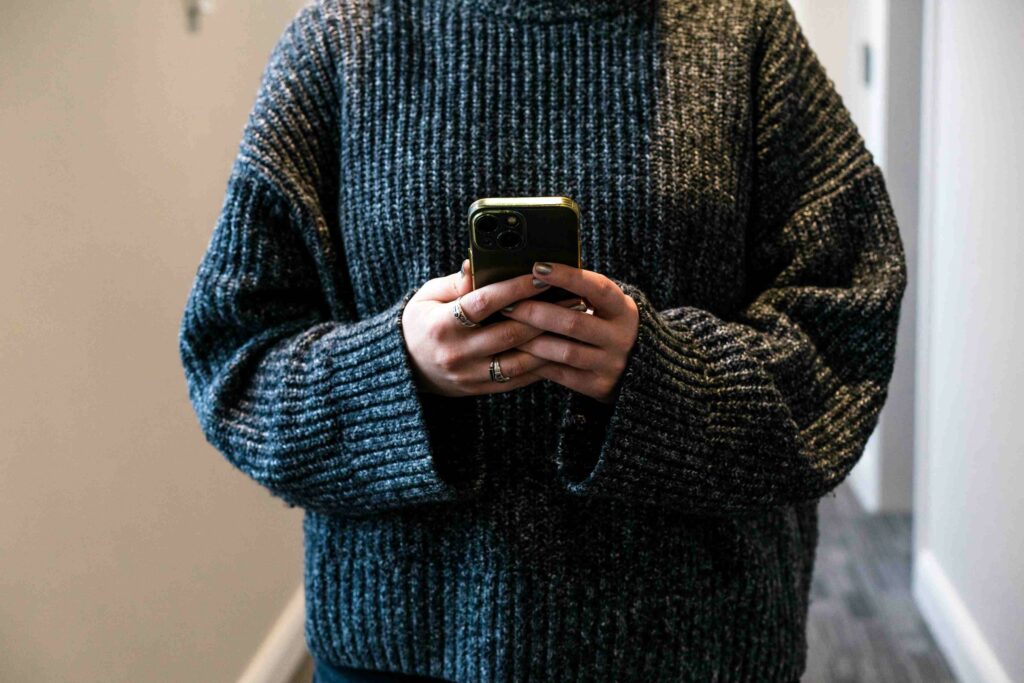
Michelle’s life changed overnight – pushing her into a year of fear, instability and hidden homelessness she never imagined could happen to her.
I can remember my parents screaming, trying to hold the front door closed. I don’t know how they weren’t killed.
“It was a nightmare. I arrived home to find a crowd of men in my garden, banging down our front door. Many of them wore balaclavas, others didn’t as they knew they could do whatever they wanted. A number of shots were fired. I can remember my parents screaming, trying to hold the front door closed. I don’t know how they weren’t killed.”
“I was working, I had some cash and I stayed in a hotel for a while. I had to keep my job, I always worked, so I needed to stay in Belfast. I stayed with friends, anyone who would have me, but I knew that they were afraid of the paramilitaries, so I didn’t stay in one place for long. I was terrified, I couldn’t settle, and I felt like I was imposing on everyone.”
Michelle explained that she had to cut her hours in work as her mental health had deteriorated significantly. As such, she was not in a position to secure a private rental, nor was she in ‘the right frame of mind’ to seek assistance from charities or other authorities.
“I really felt stigmatised. I thought that people would think my family had done something to deserve this, that we brought it on ourselves in some way, which wasn’t the case. I did speak with the Housing Executive, but they told me that my only option was to go to a hostel as I didn’t meet their criteria. That terrified me. At the time, my perception was that hostels were for addicts or people with real problems. Not somewhere that I could survive in.”
Michelle continued to ‘sofa-surf’ for over a year, until she returned to live with her parents when they eventually found a private rental in an area where ‘they felt safe.’ Whilst this chapter in her life has affected her significantly, Michelle explains that being homeless and ‘trying to function,’ was the greatest challenge she has ever faced.
“I remember going to work, afraid to tell my colleagues what had happened. I had a toothbrush in my handbag, and I had no idea where I was staying when my shift ended. I had never imagined what it would be like to not have a home, to not have a base from which to live your life. Everything deteriorated, my health, mental health, relationships, everything. I didn’t know where to turn, and because I had no kids, was young, healthy and some would say, successful, I really felt that I was on my own.”
Michelle was keen to tell her story as she feels that there is no real understanding of the extent of ‘hidden’ homelessness or the factors which lead to it. Quite simply, Michelle believes that:
“Anyone could find themselves in this position, not necessarily at the hands of paramilitaries, but there are a number of factors that could leave you homeless. Getting a house again was only a small part of rebuilding my life. I felt so vulnerable and worthless for many years, it was degrading lying on people’s floors and practically begging people for a shower or to wash my clothes. If I could suggest one thing, I would say that the relevant agencies and authorities really need to understand the paths that people have travelled, and the impact that being homeless has on every aspect of their lives. I needed more than someone to help me fill out a form, I was totally broken at the time.”
More Stories
Caolan
Caolan left home when he was 18 without anywhere permanent to live, he spent the next two years sofa surfing at friends or family’s homes. After moving into his own place, Caolan’s home was broken into on numerous occasions, including two times when he was in the house which contributed towards serious challenges with mental health.
Read story
Keith
Keith had it all. Wife, kids, a home, an exciting job as a chef and all that came with it. However, his perfect life came tumbling down one Christmas morning when, instead of opening presents as a family, his wife found him overdosed in the bathroom.
Read story
Meabh
At just 22, Meabh had already survived years of hidden homelessness – moving between sofas, the streets, and finally finding safety and stability at Simon Community.
Read story